


Ajay Kurian, artist and founder of NewCrits, sits down with Elvira Horvei — photographer, sculptor, and his executive assistant of nearly three years — to reflect on their mentorship at Skowhegan, the nature of critique, and what it means to build something together over time.
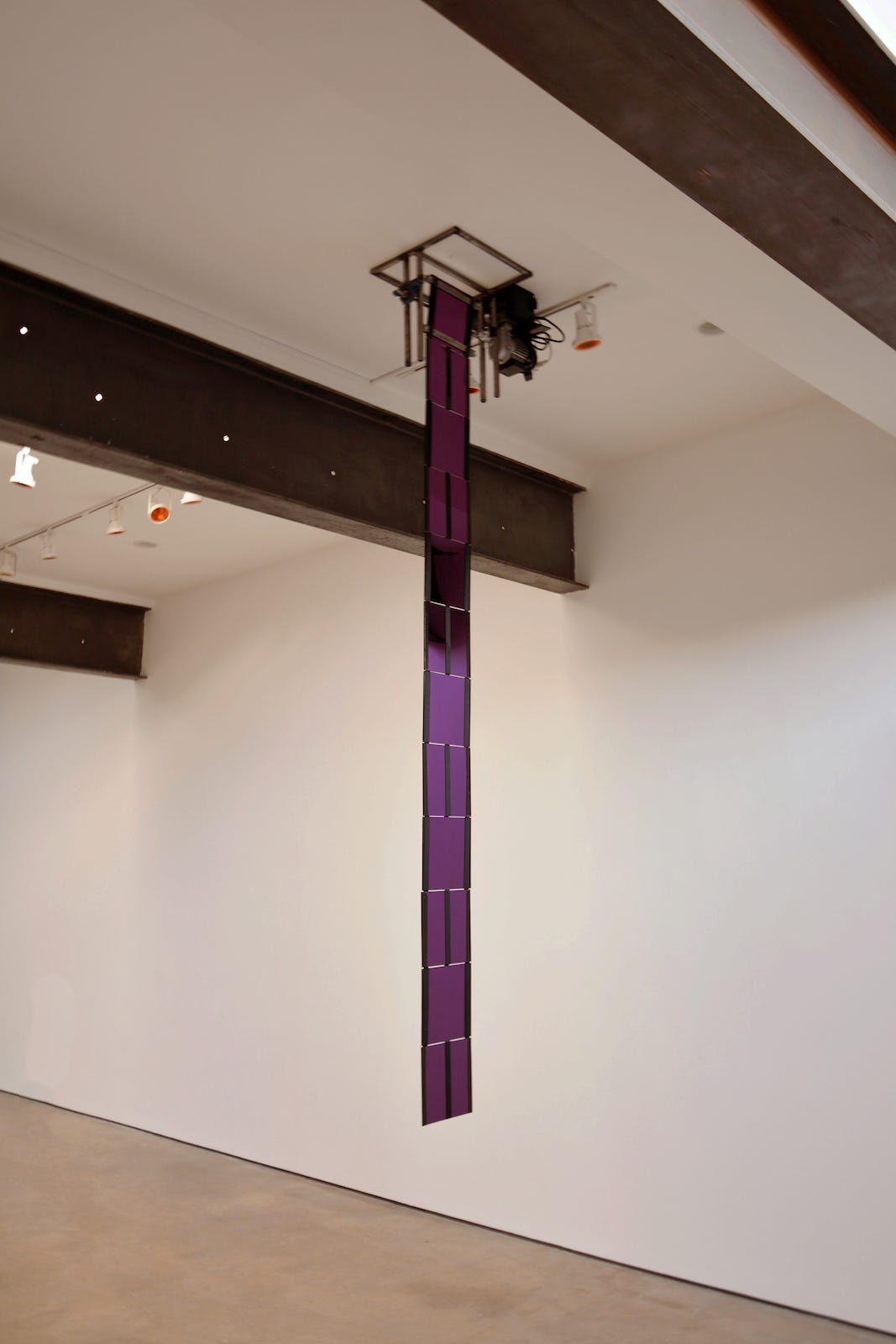
How a Single Phrase Can Change Everything
Elvira Horvei: I remember the first studio visit the most. There was a sculpture I was making, and you said it looked like it was breathing. I corrected you — I said, no, it’s holding its breath. You nodded and you got it. And I was like, okay, we speak the same language. We’ll get along.
Ajay Kurian: So the holding-your-breath thing — it’s not like you had that phrase already in your head. It was because of a statement that you were able to respond to that led you to it.
EH: Completely. Then it made sense that I was so obsessed with having the sculpture inflated. I liked the performative aspect of having to inflate it and it deflating and doing that over and over again. But I wanted it to be still.
AK: Stillness was huge for you.
EH: It was huge. That was the summer I discovered movement.
AK: How do you think about stillness now?
EH: Impossible. I’m at a completely different place. It’s not something I’m trying to achieve anymore.
AK: What I really like about how I’ve seen you grow is that, as a young artist, you have certain ideas, and once you realize their impossibility, there’s a path where people romanticize that impossibility for the rest of their career. Whereas your development was different — you saw that it was impossible and you started to inquire about what the lived reality was. What it meant to already be in the middle and to work from that place. It’s like: all right, bet — so what is it then? What is it that we’re living?
EH: I think what I was chasing that summer was a perfect representation, and stillness wasn’t the tool to do that. It’s the opposite. If you manage to represent something in its changing and its living, that’s a perfect representation. But since I came from a photo perspective, stillness was the first place I went — it’s supposed to be fixed. And how do you unfix a medium that’s so based on that fixedness?
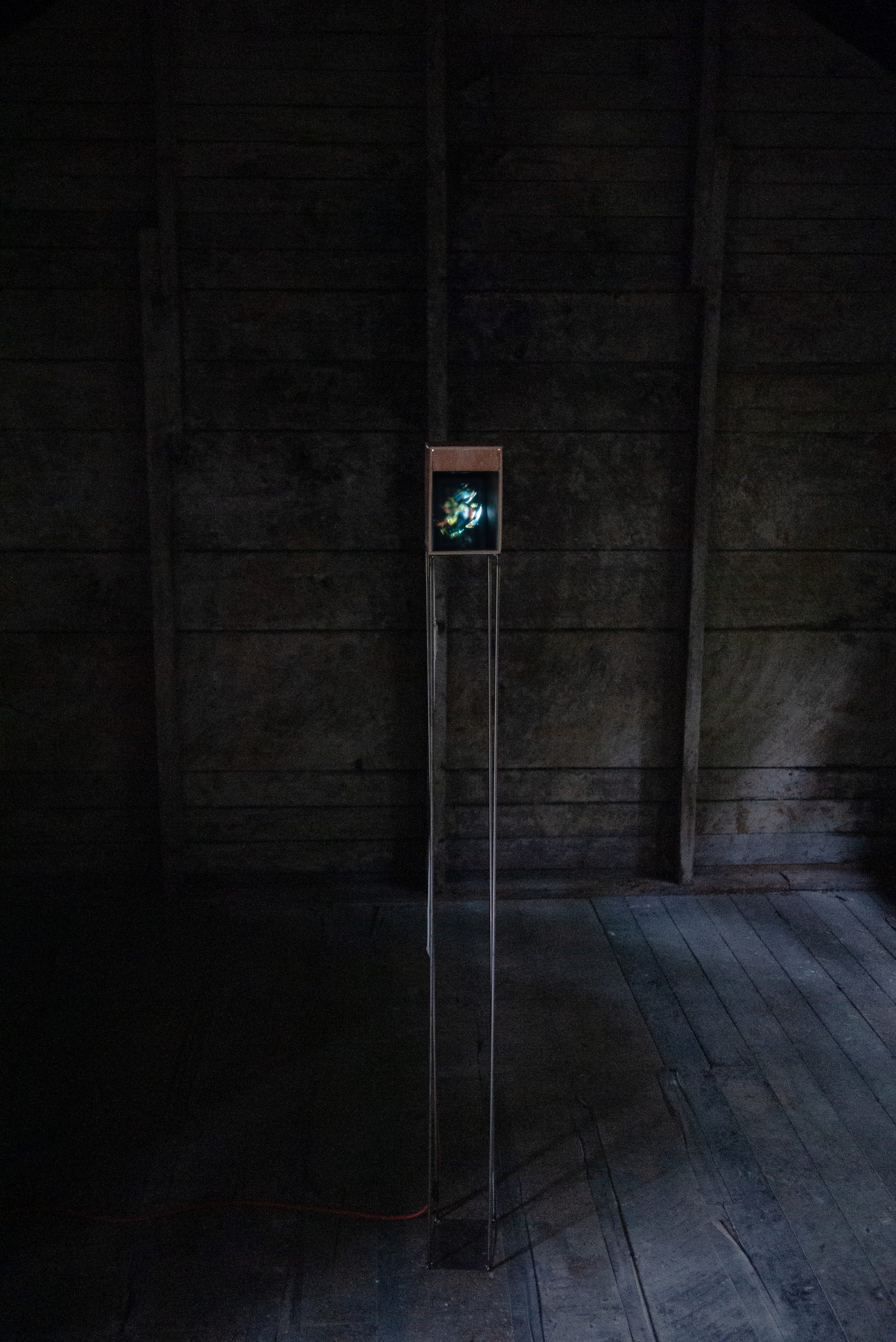
What Good Critique Actually Does
AK: How did you notice me change as a critic between the first visit and the second? Was I holding on to things you felt I should have let go?
EH: Not at all. What I noticed in the first visit is that you laid the groundwork for how you critique. You said something about entering my world and leaving yours behind — understanding my constellation of ideas and references. Not everyone does that. It can be very helpful to get different kinds of critique, but that’s what I needed at the time.
Then during the second visit, it was clear that you did it again, but differently. That’s why prolonged mentorship is so valuable — you build a vocabulary together. You were building on what you saw before, but you weren’t holding on to it either. It was like you stepped into the shed and it was just: okay, we’re here now. You critique in a very immediate, in-the-moment way that allows me to be more in the moment too.
AK: It’s almost an ethic I have - respond to the work. Don’t give generalized rules, let it come from the work first. Always tether it to the work.
I actually have never put this together before, but I think the reason I can get away with saying certain things to artists — things that might feel more critical coming from someone else — is because it’s truly a discovery for me at that moment. The freshness and immediacy for me almost induces that state in the other person, so they don’t come in with preconceived ideas of what they were trying to do. It’s more: oh, shit, this is happening right now. That’s interesting, right?
EH: It’s kind of like my reading group — three artists and one philosophy and theology PhD student. He gets really annoyed that we, as artists, start talking about our associations: “Oh, this makes me think of that.” And he’s like, no, stay with the work. We’re trying to understand the work first, then we can go on. It’s similar in a crit. You don’t want someone to step into your studio and just start talking about other things. This is the meeting that’s happening.
AK: You can flag references — oh, this reminds me of so-and-so — but then return. They’re the footnote in the conversation.
EH: Exactly. And you still gave me tons of good references. But that didn’t take up the bulk of the time. It was just: note this, look at it later.
AK: The system of it, actually, is just being as present as possible. Staying in the immediate moment of experience allows the artist to stay in that moment too — to slough off the conditions they came in with. It makes the work fresh in a different way.
On “Sober Wonder”: The Work That Holds Its Breath
AK: The visit I remember most is going into the shed and seeing your finished piece.
EH: You said something that I wrote down in my notebook. Sober wonder.
AK: Sober wonder. That does sound like me.
EH: It felt like you understood.
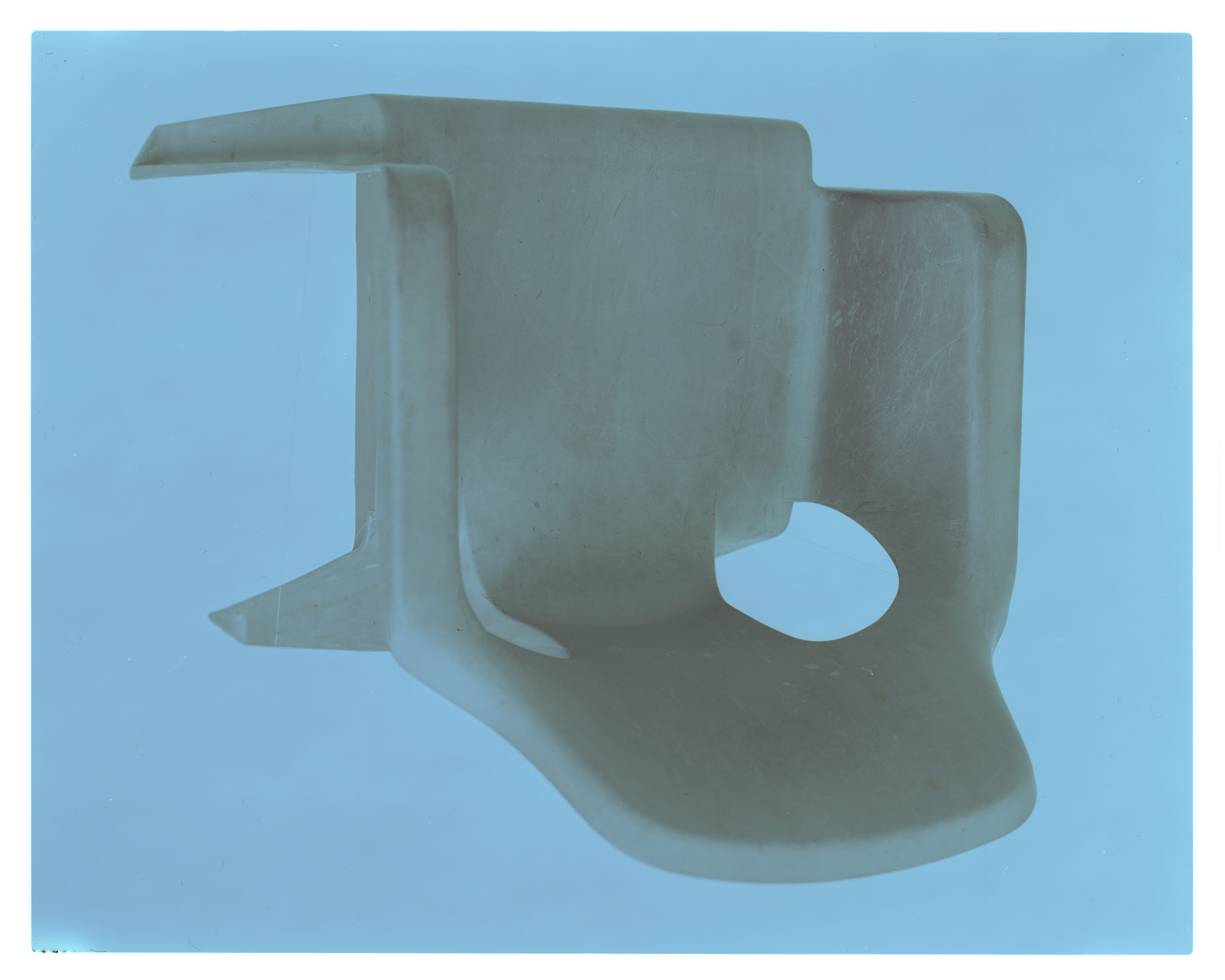
AK: There was something so object-driven in what you were photographing — and also in treating the image as object. That really helped me understand the practice you were building and the idiosyncrasy of the images. The image of the blue chair. That felt more mature than your age. It felt like the work of an older photographer, in a good way. You have to have a lot of confidence to make an image like that and understand the value of it.
There has to be a level of sobriety about how you look at an image — how you can take yourself out of the making and become your first viewer. You had quite a good handle on that. You had analytic ability while also being able to fall into the magic of an image. That’s rare. It’s really exciting when somebody can do that so young.
EH: The chair piece was called Sunsitters. I remember you liked that title.
AK: I could tell that you liked finding a good title as much as I liked finding one. The thought process is almost like a montage of everything you’ve read, and it absorbs — and then there’s this final extrusion that becomes a title.
EH: And it’s completely dependent on the work. It’s the combination of those things.
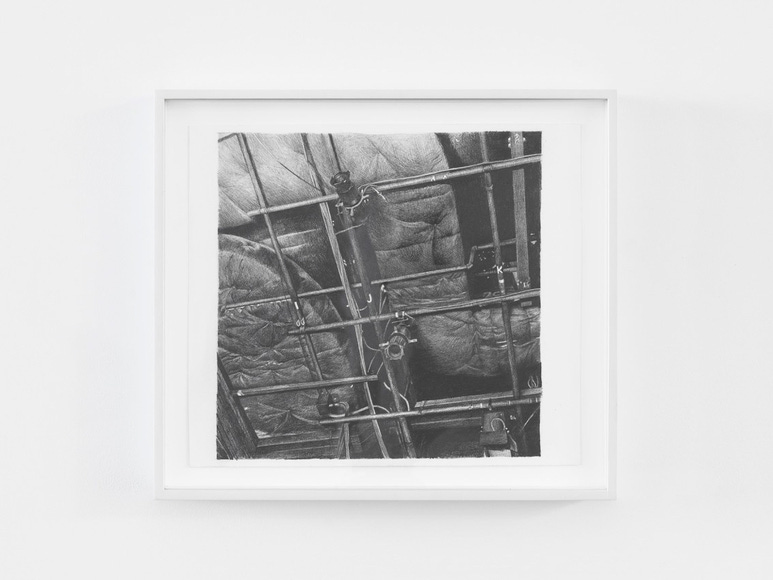
Practical Effects vs. Special Effects: On How Artists Work
AK: A person who’s visited my studio many times is Jacob Kassay. He has such a specific set of parameters for his own practice, but it’s incredible to me that he could give a fuck all about those things when he’s in somebody else’s studio. He’s given me very precise feedback I never would have thought of myself. He was the first person who told me: there are artists interested in special effects, but you’re interested in practical effects.
I was like, that might be the nicest thing anyone’s ever said about my work. I don’t want to go to a level of theatricality completely divorced from the body. I want those jankier things that make magic happen — where you also know how the trick is done.
EH: Practical effects are why I knew we’d get along. I looked at your work before the crit, and that’s what I saw — that you wanted to let people in on the secret, but still attain magic. That’s really hard. And I was like: okay, if you can do that, then I’ll have something to learn.
AK: That’s actually what you’ve gotten better at over time, too. The first images I saw were trying to understand the mystery — almost to freeze it, make it perfect, end it. When you realized there was no freezing, the work stopped trying to tell you there was mystery there. It forgot it was supposed to tell you anything. And because of that, it gained autonomy. That was the mystery.
When you see an image that’s so matter-of-fact — where you’re like, I have no questions about this, I don’t know what I’m looking at, but I have no questions about it — it’s the way you’d look at a tree. You don’t know everything about how it came into being, but it’s here, and you can apprehend it. That was really beautiful to see, because I could see you letting go and getting excited about what that meant for your practice.
Rules Worth Keeping, Rules Worth Losing
EH: I had a lot of rules after I graduated, and if I hadn’t gone to Skowhegan, I don’t know if I would have changed. Seeing so many artists at so many different stages — I was always aware this is a long-term thing, but that helped me see that this framework I’m building, these rules I’m setting, they’re going to be there for a long time. So some of them need to go, some need to change, and some need to stay.
AK: God, you’re so well-adjusted (laughter). The fluidity to know it’s never either/or — it’s never, well, the rules don’t work so I have to throw them all out. It’s: what’s working? Taking stock. I use the word objective carefully, but I think what I mean is having a deep reservoir of what you understand about your own subjectivity, so you can move between subject and object quite fluidly. That gives you the only objectivity you might actually be able to have.
EH: And then completely pivoting. From the show in St. Louis to the one in Oslo — from wanting to direct people to the original and trying to preserve it, to being like: okay, these copies are real as well, and they need their own life. There’s a playfulness there. It’s always so exciting to see artists disagree with themselves.
AK: You did that really well. The work got more playful, but you maintained your rigor and specificity. The playfulness didn’t mean just any old thing. It was: no, it has to be this exact thing — and that’s clearly fun for you.
Building Something Together: On Three Years at NewCrits
EH: One of the first things you did when I started working for you was give me homework — read one piece of art criticism every week. I’ve always respected the relationship between teachers and students, but I think I could have been isolated without NewCrits. I very much could have just gone into my own studio and not cared about the world out there at all.
Through NewCrits, I’ve learned the value of being part of the systems I’m in. I’ve had so many conversations with artists, heard what people are unhappy about, and then had the opportunity to do something about it.
AK: As I’ve gotten to know you more, what’s occurred to me is that you’re quite a fearless person. When there’s a new challenge in front of you, you push forward and learn the thing. In fact, I think sometimes you’re almost excited by discovering there’s a new standard — like, oh, we can go higher. It’s nice to be around.
EH: And that helps with the fearlessness — when you have the means to change something, it’s not just a thing you’re afraid of. It’s not fun when you have nothing to fight with. That’s not a fight.
AK: That made me think of my own personal struggles, too. Before I had language around what I was experiencing in the art world — the processes of racialization, all of that — I didn’t know how to fight, didn’t even know how to stand up for myself. And then when you find language and fellow travelers, whether a person, a book, a body of work — all of those things give you more information. Then you can start forging your own tools. And sometimes weapons.
EH: And that’s what we’re doing.