

Coordinates of Collapse: Pluto Return and Pre-War Imagination
Transcendence, Transgression, and the Discipline of Intuition

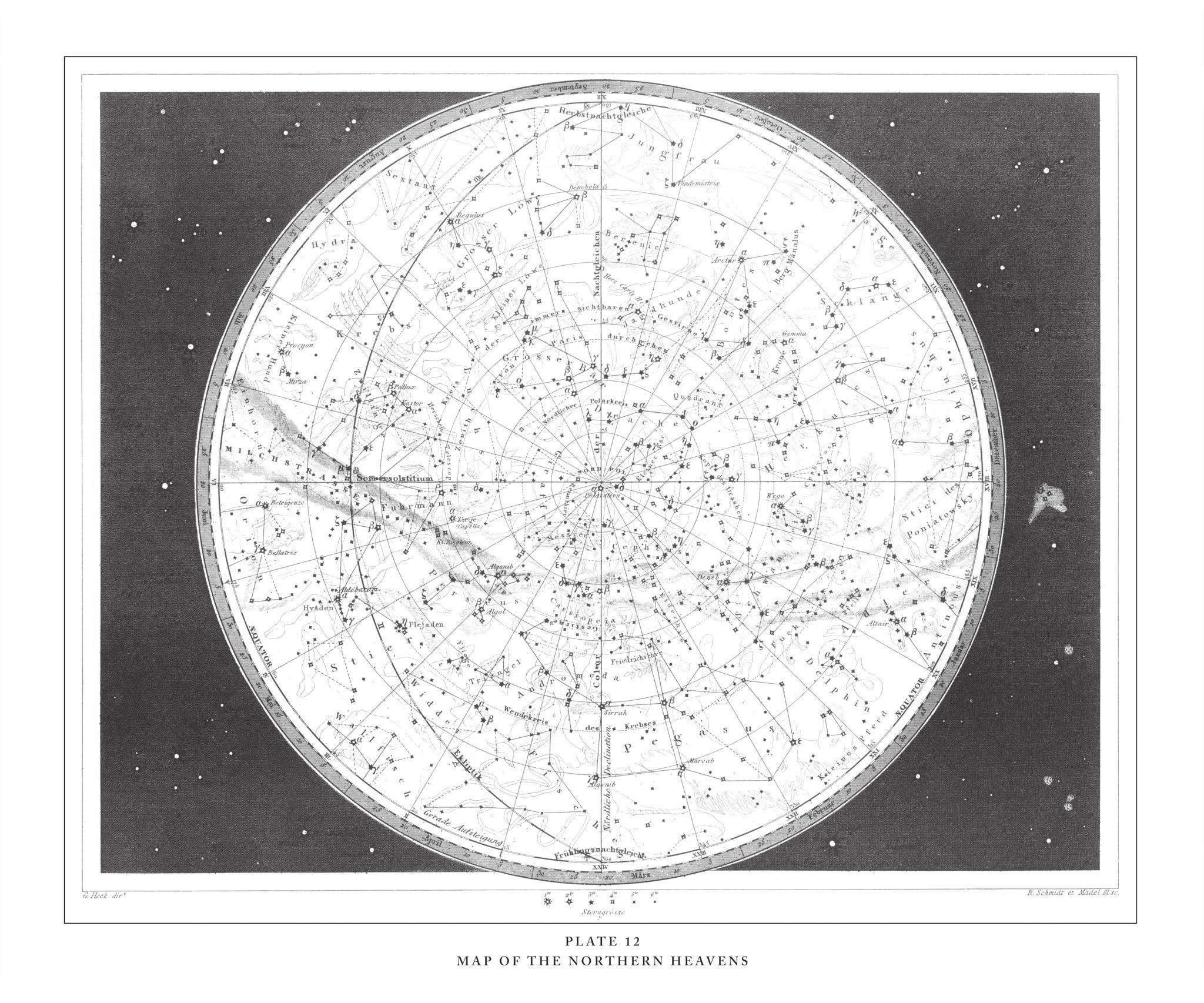
I’ve been researching for an exhibition, and my thinking has taken me into the years just before the American Civil War. I’m specifically looking at the literature - poetry, essays, novels. There’s Emerson’s faith in moral ascent, Whitman’s early expansiveness, and Rousseau’s belief in an original clarity beneath corruption. Looking at just these three writers, there’s an air of inevitability, as if history could be coaxed toward endless refinement if one trusted intuition deeply enough.
At the same time, Nathaniel Hawthorne sits there, resistant and suspicious of purity, attentive to inherited stain and communal cruelty. And honestly Emily Dickinson was really just doing her own thing, seeing how far she could fracture rhyme, rhythm, and structure until the ouroboros of insularity and universality met. The literary moment before the war isn’t unified - this schematic is far from perfect - but the fact that there was a notable movement of transcendentalism right before the war still attracts me.
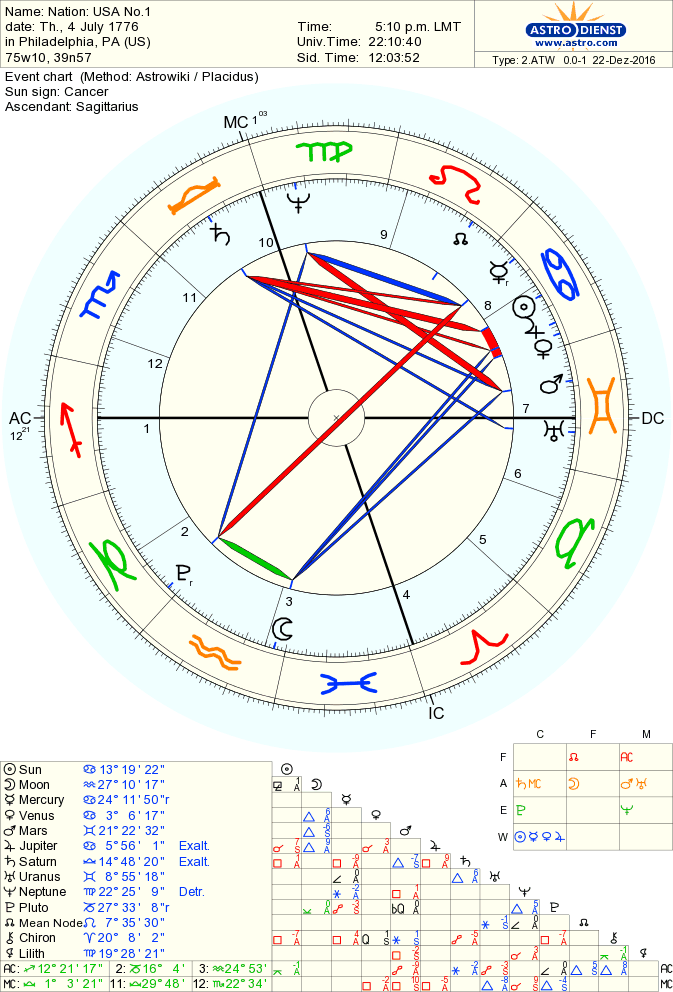
I suppose what got me thinking about literature before the Civil War was hearing that the astrology of our moment is quite aligned with the astrology of that one, something I learned while reading a recent update from Chani Nicholas, an astrologist I follow and admire. I quote her here:
We are currently living through Pluto in Aquarius, and the Pluto return of the Haitian, French, American, and Industrial Revolutions. We are also living through Neptune in Aries and Uranus in Gemini, and both the Neptune and Uranus returns of the American Civil War. Add to that the Uranus return of WWII and the creation of NATO.
Whatever you might think of astrology, the parallel got me thinking about what artists and writers were thinking just before the atrocities of the war. The fact that there is such spiritual capaciousness feels both strange and totally appropriate (as most stories do when granted hindsight), but what does our age seem to be producing at this moment? It’s hard to say, as we’re far more connected than before and therefore grand narratives, or even narrow, local ones, feel difficult to parse. Thus speaking simply for myself and the current I wish to tug at, I have been looking at what transgression means to us in a moment when it’s become evidently clear that much of the world’s elite are a group of murderous, pedophilic rapists.
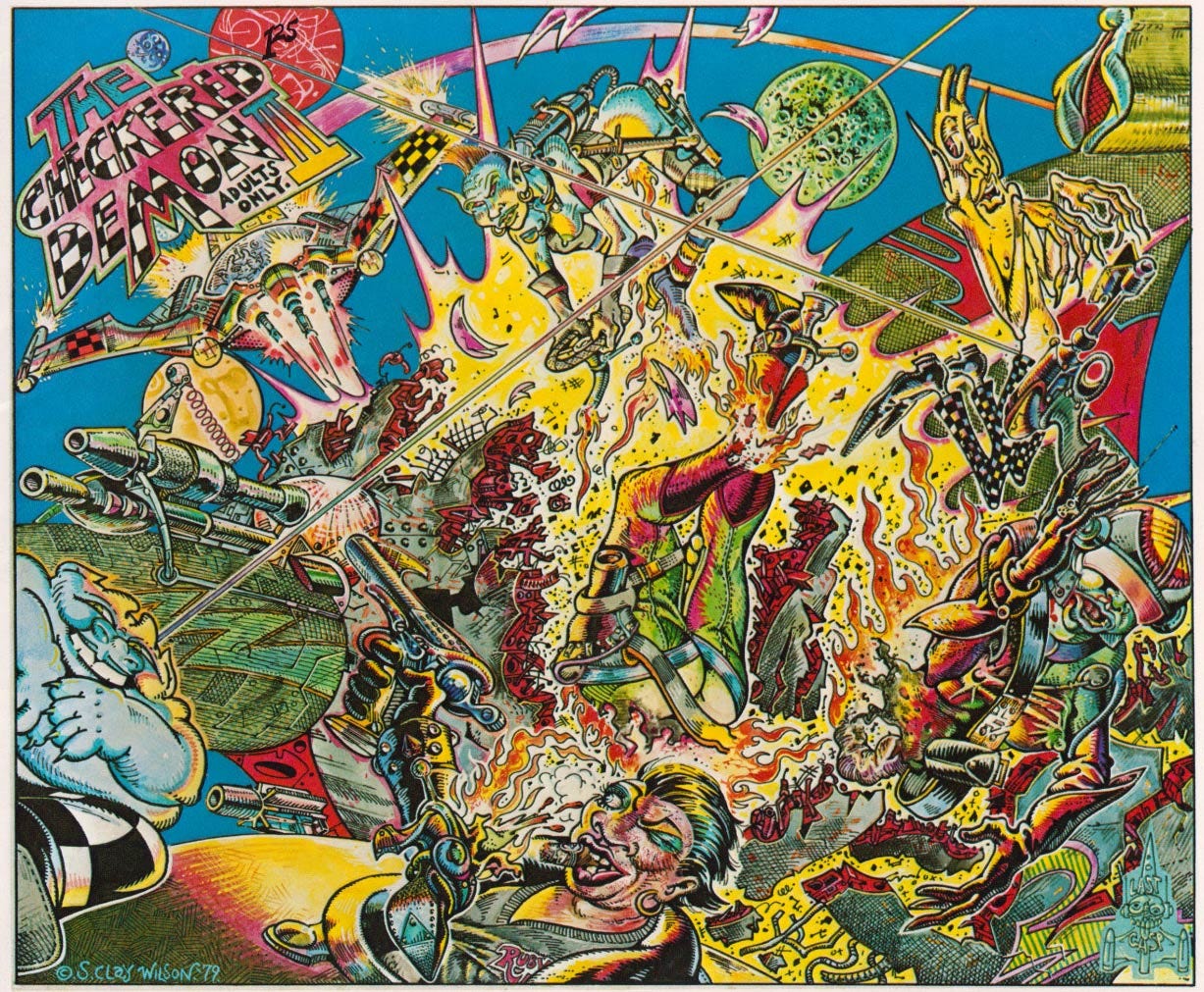
So while reading 19th-century literature and thinking about prophecy and rupture, I’m also looking at 1960s underground comics, particularly the work of S. Clay Wilson. The images are feral, violent, excessive - they’re sexual, gross, and bloody, with so many events filling the page that the mundane and the grotesque feel interchangeable. There is nothing transcendental about them in the Emersonian sense, but something about these images of sexist, racist, pirates, low-lifes, cowboys, bikers, and aliens all killing, fucking, and torturing one another has me thinking that perhaps there’s a different kind of transcendence Wilson was after, one that arrives through the tunnel of transgression. Now, I haven’t fleshed out my full thoughts on what that means, but it’s a gut feeling I have - that there’s almost a flip side of transcendence where one digs deeper and deeper into the filth in order to come out on the other side. I want to stress that this doesn’t mean I share this sentiment, but it’s one that I think is worth exploring to see if it’s possible to understand what’s around us.
I tried sketching my own comics after looking at Wilson’s work. It was almost embarrassing. I couldn’t access that register. That kind of grotesque didn’t come naturally. The extremity felt theatrical and stunted in my hands. What I felt instead was fascination—an exotic fascination. The way Westerners have historically exoticized the East, projecting power and mystery onto what they don’t inhabit, felt similar to me exoticizing this strain of Americana.
And so now my research has me headed down a series of rabbit holes, some of which include histories of Whitman and the war, while others may lead me to trying to understand Wilson better, or to the Marquis de Sade (I actually have way more to say on Sade, but that’ll be for another essay…) and what transgression means spiritually, and psychologically, particularly when wielded by men. And this is all before attempting to understand what it means for my sculptural practice.
Of course there are artists that research in more additive and linear ways, where they really are looking to interrogate historical or contemporary problems, but I think often artists move between ways of thinking where research can help build an ecosystem that doesn’t rely on logic or academic consistencies. This living ecosystem doesn’t come to be through random chance or simply throwing things at the wall, it’s through consistent and rigorous tests, only rigor may not match academic criteria in this case. Because the interesting problem here is that these tests do not mean that there is a perfect singular solution, but they do goad an artist towards what they’re actually after. Tests might be fruitless; tests might tell you: this, not that. They might confirm, deny, confuse, or illuminate. It might give you a peek into the keyhole of the room you finally want to enter.
You may be interested in how a particular material has been used throughout history, but your usage of it might take twenty detours before finding what becomes a defining necessity in your work rather than a random contingency. I often find I learn the most about what I want from sculpture when I look to other fields, like stand-up comedy, poetry, or musical structures. Adjacent forms of artistic order can disclose without becoming a blueprint or illustrative map. Seeing how a quarter second of silence before the next beat in a comedian’s story can change how the audience apprehends the joke is fascinating to me. It helped me feel confident that the discernment of where and how a jawbreaker precisely sits on a plexiglass shelf wasn’t silly, but consequential for both meaning, feeling, and landing the sculptural performance.
When I have an idea I want to share, but find myself constantly referring back to my notes, I know it hasn’t settled yet. It’s still external to my sensibility, like oil floating on top water. The real test is whether something strikes deeply enough that it starts to rearrange previously disconnected ideas into productive alignment, one that’s aligned with your inner sensibility, where more ideas and forms start to spring from it. As if through a kind of conceptual emergence, the whole becomes greater than the sum of its parts because the ideas aren’t floating anymore, they’re embodied and integrated. I’ve found that this is when I can start to let go of the scaffolding of citation and push forward without holding onto the research any longer. It’s almost like if you were to build a car, it’s a lot of research to get to the point where it drives, but once it does, you don’t need to recall how it works to drive - you just drive.
I haven’t found that yet with American Transcendentalism, our current proto-Civil War, S Clay Wilson, and transgression. They’re really just coordinates that keep insisting on their importance. I’m testing these things in all sorts of ways, seeing if they already fit into forms I’ve made previously, whether it makes sense or is just one thing forcibly attached to another. We’ll see where it goes, but it’s this kind of intuition married with rigor that can sometimes yield unexpected and genuinely exciting results.